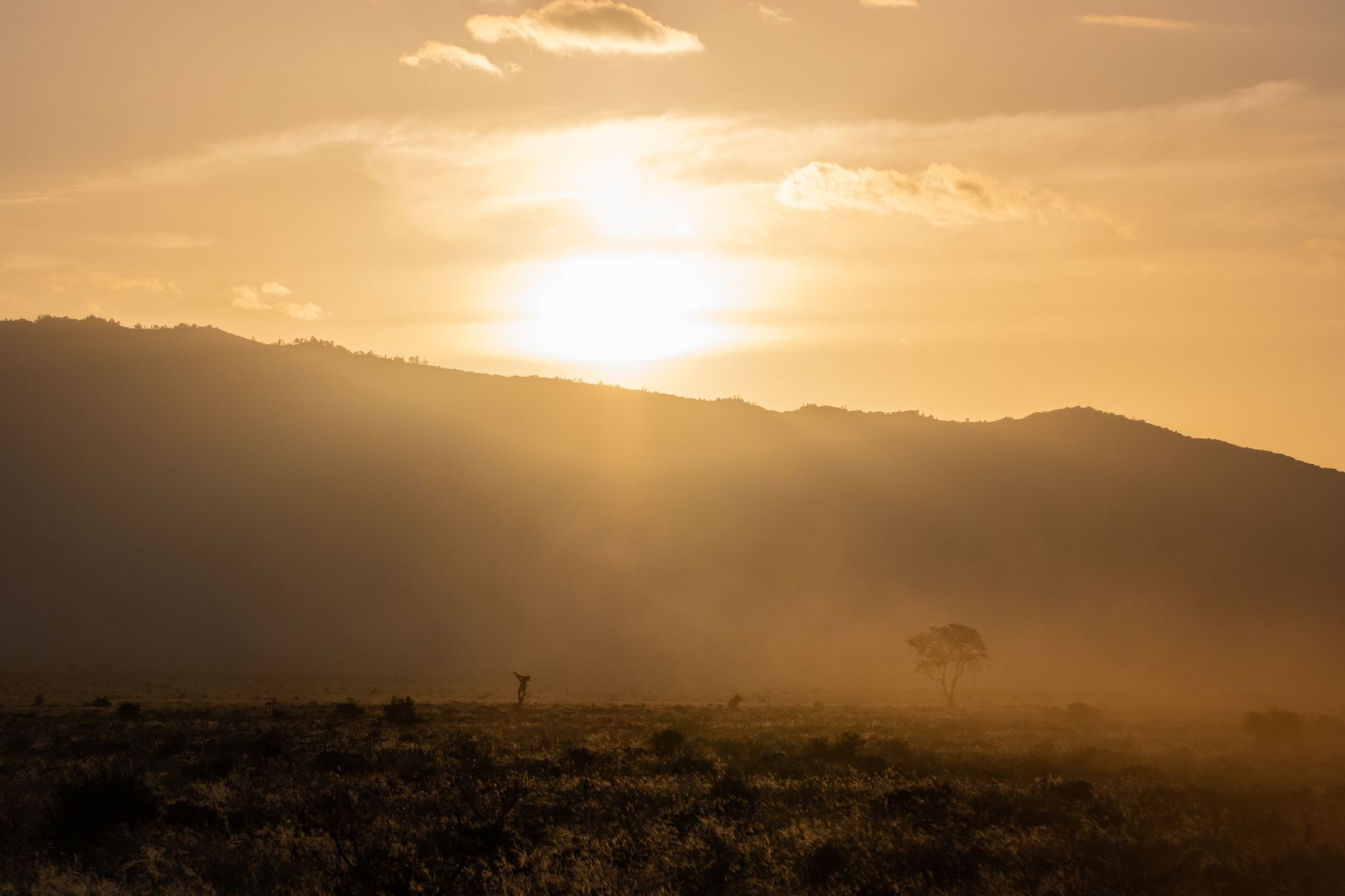
Tsavo’s red dust is not a small detail. It coats the road, the window frame, and after a few hours your collar. The trick is not to fight it. A good tsavo safari red dust clothes plan uses fabric, color, and a few simple habits to keep the dust from ruining your day. Whether you drive through open Tsavo East or the bushier Tsavo West, the right layers make the difference between a comfortable game drive and one spent brushing grit out of your eyes.
What colors hide Tsavo red dust best?
Choose medium and darker earth tones such as olive, brown, warm grey, tan, and terracotta for Tsavo. They hide red staining better than white, cream, or pale khaki without standing out like neon clothing. Avoid camouflage and use black or navy sparingly, especially where tsetse flies may be present.
White shirts look fresh at breakfast and streaked by lunch. Cream and pale beige are almost as bad. The local soil is rich in iron and leaves a fine orange stain that is hard to wash out with plain water. Olive, tan, and muted rust colors blend into the landscape and make the dust less obvious. A neutral safari clothing palette works well across Kenya, but it matters most in Tsavo.
If you wear black or navy, keep it for the lodge. In bushy areas where tsetse flies occur, dark colors can draw them. You can still bring a black belt or sandals, but make the main layers earth tones.
What clothes protect you from red dust on game drives?
Wear lightweight long trousers, a breathable long-sleeve shirt, closed shoes, and a buff or dust scarf that can cover your nose and mouth. Technical nylon or polyester blends dry quickly and shed fine dust better than heavy cotton or denim. Add a light fleece or wind shell for cold dawn departures.
Long sleeves trap less heat than you think. They keep the sun off your arms and give a barrier against dust. Trousers do the same for your legs, especially if you step out onto thorn scrub. Choose synthetic or wool-blend fabrics that do not soak up sweat. Cotton is comfortable in the lodge, but on a dusty track it turns heavy and cold by evening.
A buff earns its space in your day pack. You can pull it over your nose and mouth when the vehicle in front throws up a dust cloud. You can also wear it as a headband, neck gaiter, or wrist sweatband. A light fleece for early departure and a wind shell for the open roof complete the system. For a wider checklist, see our full Kenya safari packing list.
What shoes and accessories should you pack?
Pack one broken-in pair of closed, lace-up trail or walking shoes with grippy soles, plus sandals or camp shoes for the lodge. A buff, wide-brim hat with a chin strap, UV sunglasses, sunscreen, lip balm, and an insulated water bottle are high-value accessories for dusty Tsavo drives.
You do not need heavy hiking boots for Tsavo. Most of your day is in the vehicle. But you do need shoes that stay on your feet when you climb out for a photo stop or a short walk. Closed lace-up trail shoes keep fine dust out better than slip-ons. They also protect your toes on rocky ground and thorny paths.
Pack one pair of sandals or simple camp shoes. After a dusty day, sandals are more comfortable at the lodge. A wide-brim hat with a chin strap stays on in an open vehicle. Sunglasses with UV protection keep dust and glare out of your eyes. Lip balm matters because wind and dust dry out your lips quickly.
How do Tsavo East and Tsavo West change your clothing plan?
Tsavo East is more open and drier, so red dust sits on the roads and rises behind vehicles. Tsavo West has more bush and riverine woodland, so you will still meet dust, but mud and humidity matter more after rain. Plan for more dust protection in Tsavo East and more layering and waterproofing in Tsavo West.
| Need | Tsavo East | Tsavo West |
|---|---|---|
| Landscape | Open plains, dry riverbeds, and scattered bush | Rolling hills, denser bush, and riverine forest |
| Main dust issue | Fine red dust hangs in the air on open tracks | Dust is still present, but shade and moisture reduce it |
| Clothing focus | Earth tones, long sleeves, buff for dust | Earth tones plus quick-dry layers and waterproof shoes if rain is recent |
| Footwear | Closed trail shoes that shed dust | Closed trail shoes with good grip for wet, rocky paths |
If you are planning a night drive in Tsavo, check the Tsavo safari age rules for night drives before you book. Younger travelers may face different restrictions.
How should you dress by season and time of day?
Layer for Tsavo’s daily temperature swing: start with trousers, a base layer, fleece, and light jacket at dawn, then remove layers as the vehicle warms. Dry months from January to March and June to October bring the most dust, while April to May and November to December reduce dust but increase rain, mud, and humidity.
The Tsavo dry season is dusty. From January to March and June to October, the soil is loose and vehicles kick up clouds of red powder. A buff, sunglasses, and sealed bags for electronics are essential. Mornings can be cool, so start with a fleece. By midday the heat builds and you will shed layers quickly.
In the wet months, dust is less of a problem but mud takes its place. Rain can turn a dusty track into a slick red paste. Waterproof shoes and a packable rain shell are more useful then. A sudden storm can appear without warning, so know what to do during lightning on safari if you travel in April or November.
How do you protect luggage, cameras, and electronics from red dust?
Keep cameras and electronics inside sealed dry bags or zip-top bags when they are not in use, and carry a soft brush or blower for lenses and controls. Use packing cubes inside luggage, separate dusty shoes from clean clothes, and never shake dusty garments inside the tent. A washable outer layer protects the rest of your kit.
Cameras are the main casualty of Tsavo dust. The powder is fine enough to work into lens rings, memory card slots, and buttons. Keep your camera in a zip-top bag between photo stops. Use a blower and soft brush, not a cloth, to remove dust from the lens and controls. A dry bag also protects against sudden rain.
Inside your luggage, packing cubes keep dusty clothes away from clean ones. Designate one outer shirt and one pair of trousers as your game-drive set. Change into cleaner clothes for lunch or the evening. Use the lodge laundry service when it is available, since quick-dry fabrics wash easily. If your vehicle choice affects dust exposure, read about whether a private safari vehicle is worth the cost.
What do travelers ask about Tsavo safari red dust clothes?
Most first-time visitors ask the same practical questions about Tsavo red dust: what to wear, which colors hide it best, how to keep it off your clothes, and which shoes handle the terrain. The short answers are breathable earth tones, a buff, closed walking shoes, and quick-dry fabrics, plus a smart approach to laundry and dust.
What should I wear on a Tsavo safari?
Wear breathable long-sleeve shirts, lightweight trousers, closed walking shoes, and neutral earth tones. Bring a fleece or light jacket for cool early drives, plus a hat, sunglasses, sunscreen, and a buff for red-dust roads.
What colors are best for a Tsavo safari?
Olive, tan, brown, warm grey, khaki, and muted terracotta are practical choices. They blend into the landscape and hide red dust better than white or cream. Avoid neon shades and camouflage.
How do you keep red dust off safari clothes?
You cannot keep it off completely, so choose quick-dry fabrics and darker earth tones. Cover your nose and mouth with a buff on moving tracks, keep a separate bag for dusty clothes, and use lodge laundry services when available.
What shoes should I wear in Tsavo?
Wear broken-in, closed lace-up trail or walking shoes with comfortable socks and grippy soles. They keep fine dust out better than loose slip-ons and give better protection on uneven ground, thorny paths, and camp walks.
Is Tsavo dusty in the dry season?
Yes. Dust is generally most noticeable during the dry periods, particularly on heavily used unpaved tracks. A buff, sunglasses, breathable layers, and protection for camera equipment are especially useful from January to March and June to October.
How do you turn this packing advice into a safari plan?
Start by comparing operators that run Tsavo itineraries, because the vehicle, route, and camp setup control how much dust you face. A private vehicle lets you ask the driver to slow down on dusty tracks, while a lodge with laundry service helps you wash red dust out of quick-dry clothing. Browsing packages from established operators gives you a clearer sense of camp locations, vehicle types, and daily distances before you commit.
To compare safari operators and browse packages, start with FindMySafari, Valley Safaris, or Trunktrails Safaris. Each works with Kenya ground teams who understand the red dust and can match you to a trip that fits your comfort level. You can also compare packing lists and routes directly with TouringInsights at touringinsights.com.
Where can you find more safari planning resources?
These four external guides fill in details this packing checklist does not cover, including maps, seasonal timing, and destination overviews for Tsavo East and Tsavo West. Read them alongside this checklist before you finalize your route, travel dates, and safari operator.
- Tsavo East and West map from SafariPure
- Best time to visit Kenya from Trunktrails Safaris
- Map of Tsavo from Valley Safaris
- Tsavo destination guide on FindMySafari